

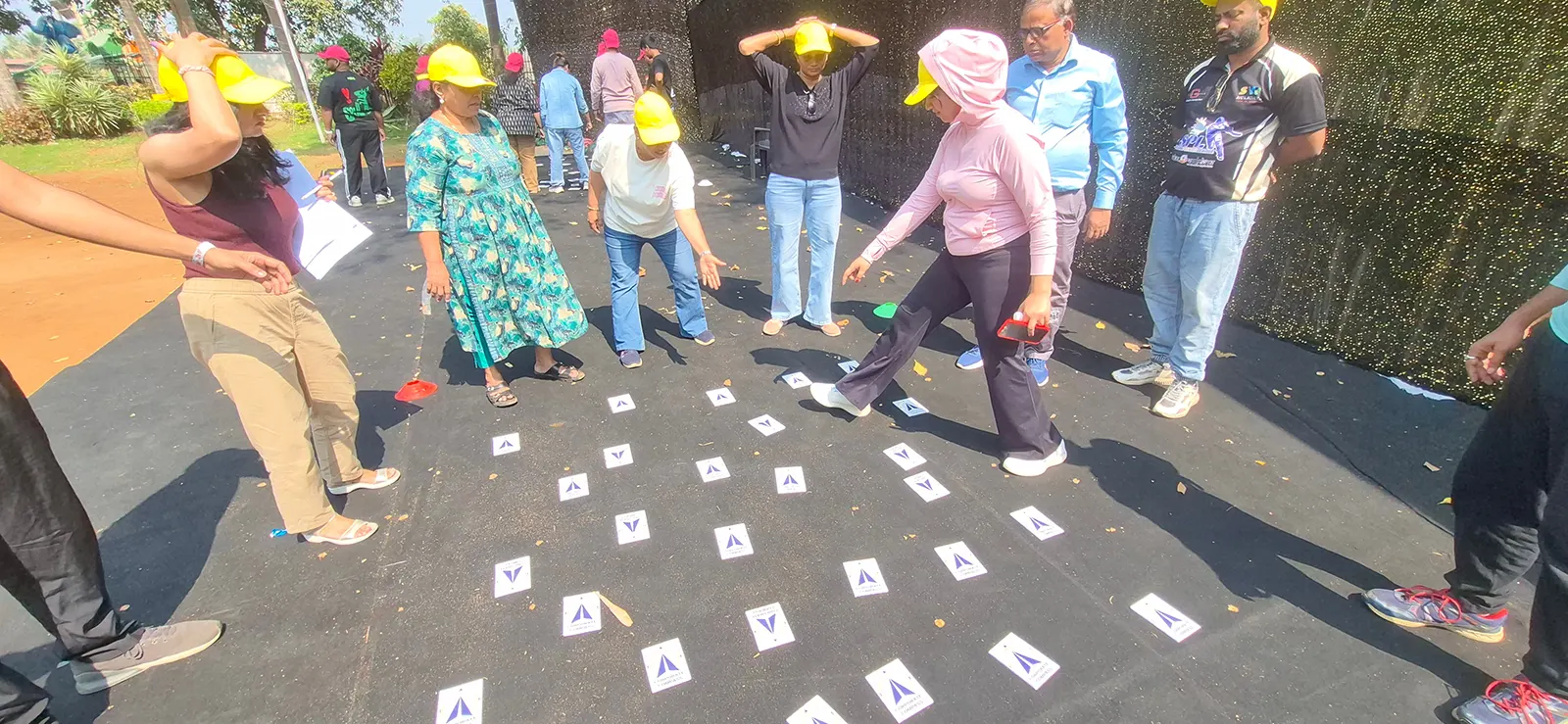
In the current business world that is characterized by a high rate of change, organizations by nature, are in an environment where the conventional method of training is likely to be unable to effect a long-term behavioral change. Training sessions, presentations, and modules are taken, and within a few weeks, employees forget most of what they have learned. The challenge has prompted the companies to move towards more active and interactive methods of learning. The experiential learning program is one of the most effective techniques that are on the rise in the present day.
The experiential approach is based on active participation, reflection and practice as opposed to passive listening. Rather than merely learning theories, employees will be subjected to real-life simulation, challenges, activities, and exercises that enable them learn through action. This practice is a major enhancement to retention, engagement, and performance at the workplace.
Companies are beginning to mix experiential with interactive experiences like game-based learning corporate strategies, and structured team building workshop experiences to help generate more powerful learning experiences.
An experiential learning program is a formal training process in which people learn and develop their skills by having firsthand experiences. Instead of the total use of lectures or presentations, employees are directly involved in situations that are aimed at simulating workplace situations.
Experiential learning generally follows four important stages:
This process ensures participants move beyond understanding concepts theoretically and develop the ability to implement them effectively.
Most institutions continue to employ traditional forms of training. These approaches, however, often pose a number of problems.
Conventional training more than often is usually dependent on presentations and theory, thus employees are not able to hold the knowledge long enough. Engaging in activity produces better memory associations and long-term memorization of knowledge.
Extensive classroom hours often reduce staff attention and engagement. Interactive learning experiences promote participation, sustain attention during training periods and make the learning experience more enjoyable, leading to more effective learning.
Theories are comprehensible to employees but they find it difficult to apply them to scenarios in the workplace. Experiential strategies fill this divide because they offer real-life situations where participants are able to apply skills prior to applying them in their practice.
Training programs are rendered unproductive as members will go back to their old habits. Experiential Learning Activities, reflection, and application to enable employees to acquire long-term behavior that will influence performance at work positively.
The Benefits of Experiential Learning Activities extend beyond knowledge transfer and significantly influence workplace performance. Experiential activities create meaningful learning because participants become emotionally, mentally, and physically involved in the process.
Interactive activities inherently promote participation since the employees are involved and not merely listening. Higher activity will lead to better motivation, better concentration, and will make the learning process better perceived and remembered by employees.
Experiences are easier to recall compared to passively presented information. Practical exercises form emotional and cognitive links which help to recollect better and help employees to put knowledge into practice with more success.
On-the-job learning is faster in producing skills as learners learn and practice concepts on tasks. This first-hand experience saves time in the transition between theoretical knowledge and the application of skills with confidence.
Real-world activities expose the participants to real-life problems that need to be analyzed, creatively and collaboratively. Frequent exposure to problem-solving activities builds critical thinking skills that enhance decision-making and flexibility at work.
The majority of the experiential activities entail group work and cooperation, which provides participants with an opportunity to enhance their listening, speaking and feedback skills. Effective communication skills will help make the team performance stronger.
Experience learning provides an employee with a chance to apply leadership behaviors in secure settings. The participants gain confidence, decision-making skills, accountability and communication skills required to be a good leader.
The rise of game based learning corporate programs reflects changing employee expectations around learning and development.
Game-based learning uses structured games, challenges, simulations, and interactive experiences to teach workplace skills.
These programs commonly include:
Unlike simple gamification, game-based learning uses the game itself as the learning environment.
Examples include:
Game-based learning transforms training sessions into highly engaging experiences.
Experiences in learning that result in emotions like excitement, competition, or curiosity have higher memory retention. Emotional engagement enhances the participation of the participants and the chances of long term behavioral change.
The interactive learning environment enables participants to experiment, make mistakes and test ideas without the real business risks. Safe experimentation promotes creativity and learning by providing instant experience and feedback.
Students obtain immediate feedback on activities, which enables them to learn quickly on strengths and areas to improve. Timely feedback enhances the learning rate and makes participants adaptive.
Rewards, challenges, and competition game mechanics can inherently boost engagement and interest. Engaged learners are more interested in reading and are more dedicated to self-growth.
The interactive experiences are able to compress the learning cycles by integrating theory, practice, and feedback into one. This method assists the participants to learn concepts more quickly and enhance the ability to apply in practical situations.
Organizations rely heavily on collaboration. However, many teams struggle with communication gaps, low trust, and siloed working styles.
This is where a structured team building workshop becomes valuable.
Modern team-building workshops focus on improving:
Unlike recreational activities with little long-term impact, effective workshops align activities with measurable business objectives.
Leadership development requires practice rather than theory alone.
Experiential learning creates opportunities for participants to:
Because participants actively experience challenging situations, they develop stronger confidence and practical leadership capabilities.
This is one reason many organizations increasingly prefer experiential leadership programs over traditional classroom training.
Selecting the right training partner significantly affects results.
Organizations should evaluate:
The most effective providers create customized experiences rather than delivering generic activities.
A well-designed experiential learning program should align directly with organizational goals and employee challenges.
Corporate learning continues moving toward interactive, experience-driven approaches.
Organizations increasingly prioritize:
As employee expectations evolve, businesses require learning solutions that create engagement and measurable impact.
Combining experiential learning program strategies with game based learning corporate methodologies and structured team building workshop experiences creates stronger, more future-ready organizations.
Conventional ways of training are no longer adequate in creating contemporary work forces. Companies need learning strategies that foster involvement, interaction and behavioural shift.
Companies that invest in experience programs, games based learning and team building activities have stronger teams, produce better leaders and have more nimble organizations that are ready to face the challenges ahead.
New Aussie players can score a fantastic deal with the uptown pokies no deposit bonus which gives you in free credits to explore the game library.
Quais mantêm o site estável no fim de semana — qual a melhor casa chinesa de aposta Foram comparadas as versões web e aplicativo em recursos e estabilidade. Veja o que distingue a primeira da última.
We suggest this page: pinco Go to browse
Unbedingt ansehen — DE crypto casino für aufregende Spielautomaten